
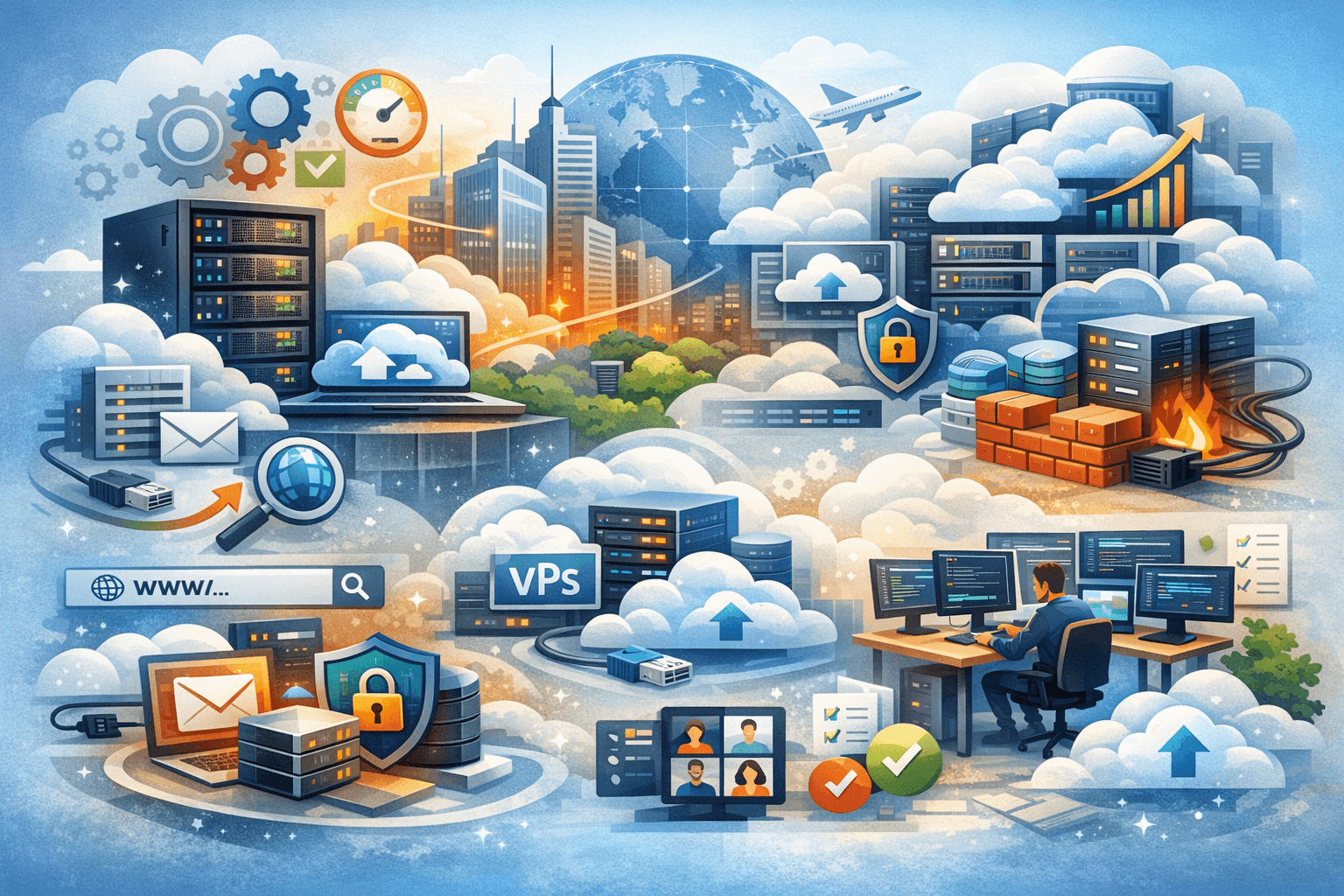
Startup IT Infrastructure — What You Really Need (Complete Guide 2026)
Author: ForRange Team
In the process of building a startup, primary attention is often given to the idea, the product, and market entry. However, the foundation of a successful digital business is a properly planned IT infrastructure. Choosing the right technical environment helps avoid system disruptions, security risks, and unnecessary financial expenses in the future.
This article discusses the key components that are essential for a modern startup.
The Importance of IT Infrastructure
IT infrastructure combines the technological resources and services that ensure a company’s online operation. It includes servers, networking services, data storage, communication systems, and security mechanisms.
A properly selected infrastructure ensures:
- Stable system performance
- Data protection
- Fast service delivery to users
- Scalability as the business grows
Domain and Online Identity
A domain represents a company’s digital address on the internet and is one of the most important elements of a brand.
When choosing a domain, it is recommended that it:
- Be simple and easy to remember
- Match the brand name
- Not be excessively long
- Use an international or regional domain extension
A properly chosen domain contributes to increased brand recognition.
Hosting and Server Environment
Hosting determines where and how your website or application operates. For a startup, it is important to choose an environment that ensures stability and allows future resource expansion.
Depending on the startup’s development stage, it is possible to use:
- At the initial stage — Shared hosting
- As users grow — migration to a VPS server
- Under high load — Cloud or Dedicated infrastructure
Incorrectly chosen hosting often leads to slow website performance and service interruptions.
Corporate Email
Business email is an important part of a company’s professional communication. Corporate email increases customer trust and enables better communication control.
For example:
- info@companyname.com
- support@companyname.com
Corporate email also simplifies employee management and improves data security.
Data Storage and Backups
Data is one of the most valuable resources of modern businesses. Technical failures, human error, or cyberattacks may cause data loss.
Recommended practices include:
- Creating automatic backups
- Storing data in multiple independent environments
- Regularly testing backups
A backup system enables rapid business recovery in critical situations.
Information Security
Startups are often targets of cyberattacks because security typically receives less attention during early stages.
Essential protection measures include:
- Using SSL certificates
- Secure authorization systems
- Regular software updates
- Firewall configuration
- Multi-factor authentication (2FA)
Properly implemented security reduces the risk of data breaches and system damage.
System Performance and Availability
Platform speed and availability directly affect user experience. A slow website reduces user engagement and negatively impacts search engine rankings.
Recommended practices:
- Using fast SSD/NVMe drives
- Implementing caching mechanisms
- System monitoring
- Load optimization
Work Environment and Team Collaboration
Modern startups often operate in remote or hybrid modes, which require an effective digital work environment.
Essential tools include:
- File-sharing systems
- Project management platforms
- Code version control
- User access management
These help improve employee productivity and ensure secure information management.
Scalability and Growth Readiness
A startup’s infrastructure should be flexible and adaptable. As the business grows, technical resources should scale quickly without system downtime.
A scalable environment allows:
- Increasing server resources according to demand
- Improving system throughput
- Reducing technical risks during growth periods
Conclusion
A startup’s success does not depend solely on its idea — a properly planned technological foundation plays a crucial role. Stable hosting, protected data, secure communication, and scalable infrastructure create an environment where a business can grow without interruption.
Correct technical decisions made at the early stage reduce future costs and ensure sustainable company growth.